Jaw Pain (TMJ): Understanding, Relief, and When to See a Doctor
Too Long; Didn't Read Temporomandibular joint disorders (TMJD) cause jaw pain, clicking, locking, headaches, and neck tension. Most often, they are benign and related to muscle tension, teeth grinding (bruxism), or stress. Gentle manual treatment—releasing the chewing muscles, improving jaw and neck mobility, advice, and self-exercises—relieves pain and improves mouth opening in most cases. However, some signs warrant prompt medical or dental attention (see below).
What is the TMJ and why can it hurt?
The temporomandibular joint connects the lower jaw to the skull, just in front of each ear. It is one of the most used joints in the body: it moves several thousand times a day for talking, chewing, yawning, or swallowing.
Around her, a network of powerful muscles (the masticators) controls every movement. When these muscles are overloaded—due to stress, teeth grinding, prolonged poor posture, or neck tension—the joint's balance is disrupted. This is what is grouped under the term TMJ disorders (or temporomandibular joint dysfunction).
These conditions are common: it is estimated that they affect nearly one-third of the population at some point in their lives, with women being affected more often. The good news is that they are rarely serious and respond well to conservative treatment—that is, without surgery.
What are the symptoms of a TMJ disorder?
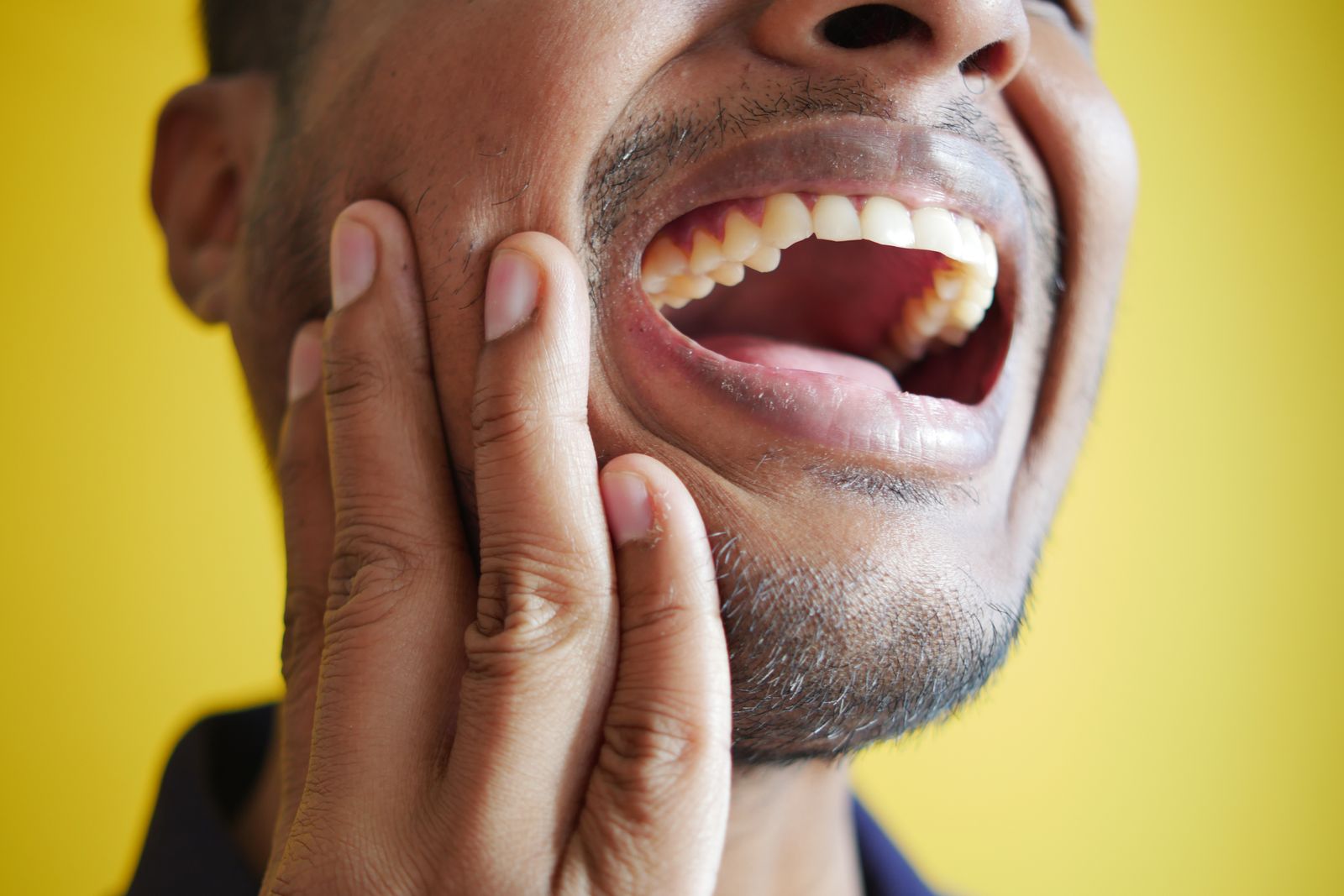
Symptoms vary greatly from person to person. The most common ones are:
| Zone | How you might feel |
|---|---|
| Jaw | Pain in front of the ear, cracking or popping sounds, a sensation of stiffness when opening the mouth |
| Head | Headaches, especially in the temples, at the end of the day |
| Ear | Feeling of a blocked ear, sometimes accompanied by ringing |
| Neck / Shoulders | Stiffness, tension that "radiates" up toward the back of the neck |
| Teeth | Fatigue, sensitivity, waking up with clenched jaws |
An important point: the jaw and neck form a functional unit. Neck tension often contributes to TMJ tension, and vice versa. That is why effective treatment addresses both.
What causes jaw pain?
There are usually multiple causes, and they compound:
- Clenching and grinding of the teeth (bruxism), which often occurs at night and is unconscious.
- Stress and Anxiety, which increase the tone of the chewing muscles.
- Prolonged postures, such as leaning over a screen.
- Neck Tension, which affect the jaw.
- Less commonly, a joint problem (disc displacement, osteoarthritis) or a dental factor (occlusion).
Understanding your personal combination of factors is the first step: that’s what allows you to address the cause, not just the symptom.
How can gentle manual therapy help?
For muscle-related TMJ disorders—which are the most common—manual therapy and exercises are among the recommended first-line treatment options. Scientific reviews show that manual therapy and therapeutic exercises significantly reduce pain and improve mouth opening, especially when used in combination.
At the practice, a session aims to:
- relax the chewing and neck muscles through gentle manual work; ;
- restore mobility in the jaw and neck; ;
- identify the triggers (bruxism, posture, stress) and give you concrete strategies; ;
- transmit to you auto-exercises to do at home, which are the key to sustainable results.
Craniosacral therapy, which I practice, is a particularly gentle manual approach that aligns with this logic of releasing tension in the cranial sphere, jaw, and neck. It is conceived as complementary support, in conjunction with your doctor or dentist when necessary.
Three simple self-exercises to try
Practice gently, without ever forcing or reproducing pain:
- Tongue slackening. Place the tip of your tongue on the roof of your mouth, just behind your upper teeth. Leave your teeth slightly apart and your lips together. This is the natural resting position of your jaw: make a habit of returning to it throughout the day.
- Controlled opening. Tongue on the palate, slowly open your mouth until you feel a slight tension (without cracking or pain), then close. 6 to 8 repetitions, several times a day.
- Relaxation of the temples and masseters. With your fingertips, gently massage the muscles of your temples and jaw angle in small circles for one to two minutes.
If an exercise increases pain, stop it and discuss it at your next appointment.
When should you consult without delay?
Most TMJ pain is benign, but certain signs warrant medical or dental advice. fast :
- jaw Stuck, impossible to open or close; ;
- Pain appeared after a shock or facial trauma; ;
- swelling, fever, or severe pain that worsens; ;
- jaw pain to the effort, accompanied by chest pain, arm pain, or shortness of breath — in this case, it is a Urgency Call 144 ;
- numbness of the face, vision or hearing problems.
Outside of these situations, pain that persists for several weeks simply deserves to be evaluated in order to act before it becomes chronic.
Frequently Asked Questions
Do TMJ disorders go away on their own? Often, mild episodes subside. But when pain returns or becomes persistent, acting early prevents it from becoming chronic.
Is my jaw cracking serious? An isolated crack, without pain or locking, is very common and generally harmless. It's the association with pain or functional discomfort that warrants an evaluation.
Is a dental retainer necessary? Sometimes useful in cases of bruxism, it is prescribed by the dentist. It combines well with manual work on muscle tension.
How many sessions are needed? It depends on the duration and causes. Many people feel an improvement in a few sessions, with self-exercises between appointments.
Does stress really play a role? Yes, it's one of the most common factors: it increases teeth grinding and jaw muscle tension.
Can we consult in English or Spanish? Yes. I receive in French, English, and Spanish.
Article written by Alison Beck, Cranio-sacral therapist and reflexologist at On Therapy, in Grand-Saconnex (Geneva). To assess your situation and build a tailored plan, book an appointment online or call the practice at +41 22 920 01 11.
About Therapy — Chemin Taverney 13, 1218 Le Grand-Saconnex, Geneva.
Sources and further reading
- Systematic reviews on the effectiveness of physiotherapy for TMDs (manual therapy and exercise: pain reduction and improved mouth opening), 2023–2026, PubMed / PMC.
- Meta-analyses on manual therapy and therapeutic exercise in temporomandibular dysfunction.
- Studies documenting the functional link between the TMJ and the cervical spine.
This article is for general informational purposes only and does not replace an individual diagnosis by a healthcare professional.


Leave a Reply