Low back pain in Geneva: causes, treatment, and physiotherapy
In short — Low back pain is one of the most common conditions: the vast majority of adults experience it at least once in their lifetime. In more than 90% of cases, it is considered «common» (nonspecific) and benign, with no serious underlying cause. The first-line treatment is no longer rest, but rather movement Staying active and gradually resuming activities is now recognized as the best way to heal and prevent recurrence. At the On Therapy practice in Grand-Saconnex, care combines education, adapted exercises, and a return to activity.
What is lower back pain?
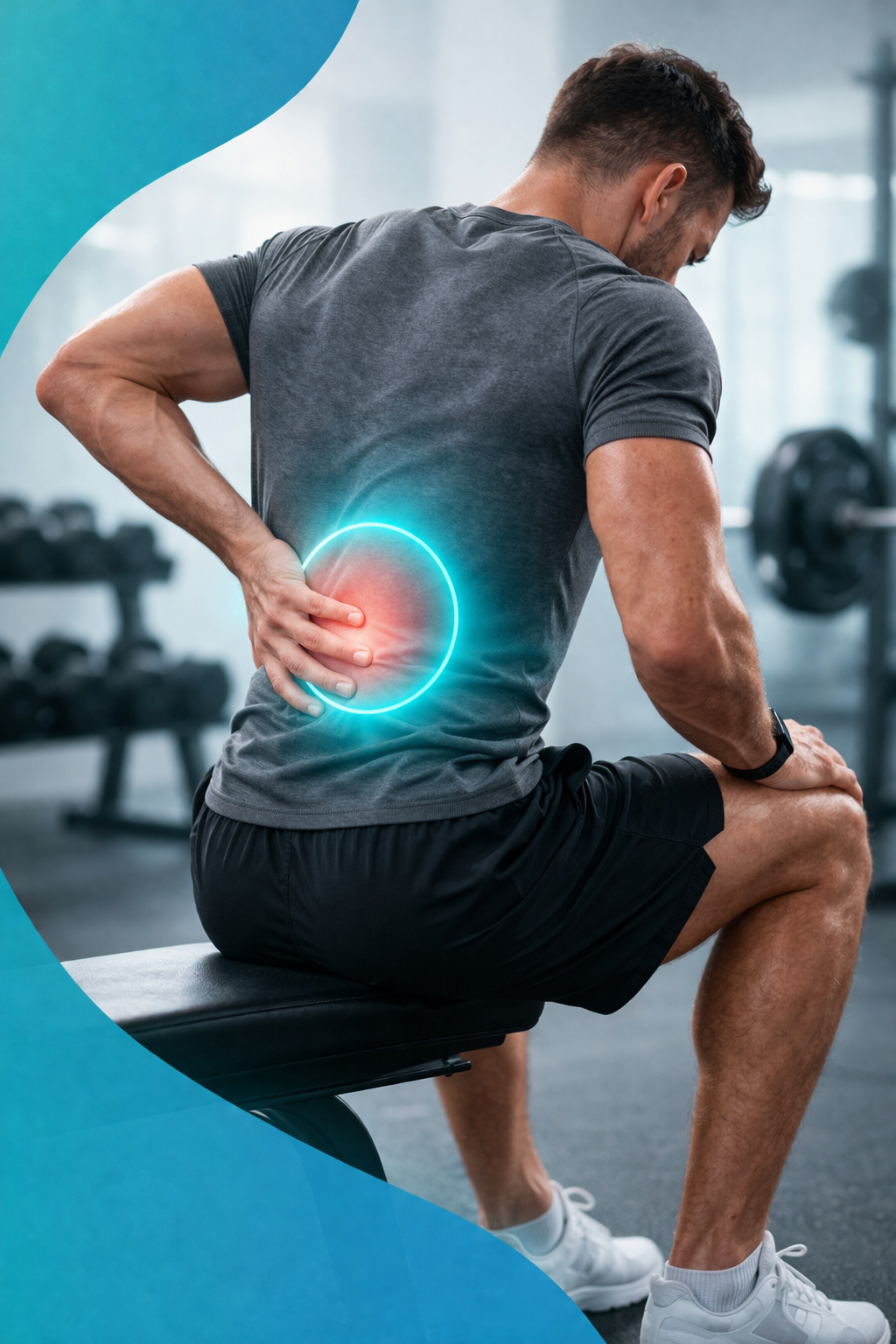
Low back pain refers to lower back pain, located between the last rib and the gluteal fold. It can be localized (a «lumbago» or "thrown out back"), last a few days to a few weeks, or become persistent.
There are three forms distinguished by duration:
- Acute low back pain less than 6 weeks
- Subacute low back pain : between 6 and 12 weeks
- Chronic low back pain over 12 weeks
In the vast majority of cases, it is a common low back pain (or not specific): the pain is not related to a serious illness, but to tension, mechanical strain, or lifestyle factors.
What are the symptoms?
Low back pain primarily manifests as:
- one low back pain, sometimes with sudden onset (lumbago)
- one stiffness and difficulty moving, especially in the morning or after prolonged sitting
- a pain augmented by certain movements (lean over, stand up, carry a load)
- sometimes radiation to the buttock or thigh
When the pain sharply radiates down the leg along the path of the nerve, it's more commonly called sciatica.
What are the causes of lower back pain?
In common low back pain, there is often no single identifiable cause — and it's important to understand: the absence of a serious cause is rather good news. Factors that frequently contribute:
- desk mechanical constraints False movement, load bearing, prolonged posture
- desk muscle tension and imbalances
- the sedentary lifestyle and lack of physical activity
- the Stress and psychological factors, which influence the perception of pain
- lifestyle factors: overweight, smoking, poor quality sleep
Contrary to popular belief, disc wear and tear or osteoarthritis visible on imaging are not always responsible for pain; many people without any pain show these signs.
When should you seek immediate medical attention?
The vast majority of back pain is benign. But certain signs («red flags») warrant a medical consultation. without delay, because they can indicate a more serious cause:
- a pain following a severe trauma fall, accident
- one loss of strength or a loss of sensation in one leg
- desk trouble urinating or defecating
- one fever, chills, or unexplained weight loss
- a history of cancer or sharp pain at night that doesn't subside with rest
- pain that does not improve at all after several weeks
⚠️ In the presence of any of these signs, consult a doctor.
Do we need an X-ray or an MRI?
Most often, No. For common low back pain without red flag signs, recommendations advise against routine imaging. An X-ray or MRI performed too early:
- doesn't generally change the support
- often reveals «anomalies» (wear and tear, small hernias) that are common and present in many people without pain
- can even worry unnecessarily and hinder the recovery of the movement
Imaging is reserved for situations with red flags or in case of pain that is resistant to well-conducted treatment.
How to treat low back pain? The movement approach
The major change in recent years: Rest is no longer the treatment. Current recommendations (notably from HAS) place the’Physical exercise as the primary treatment for lower back pain. Staying active, resuming your usual activities, and moving around are the best ways to promote healing.
At the On Therapy practice, care is structured around:
| Pillar | What it offers |
|---|---|
| Education and reassurance | Understanding that pain is rarely serious alleviates fears and promotes recovery. |
| Active exercises | Mobility, core and hip strengthening, and endurance — tailored to your situation |
| Gradual recovery | Gradual return to daily activities, work, and sports |
| Global approach | Consideration of sleep, stress, and lifestyle habits |
The goal is not just to relieve the immediate pain, but to restore confidence in the movement and reduce the risk of recurrence.
5 Useful Exercises for Lower Back Pain
These exercises are provided for reference only and should be adapted to your situation. In case of doubt or if the pain significantly increases, talk to your physiotherapist.
- Two rounds / two hollows («cow-cat») — On all fours, gently alternate rounding and arching your back to loosen your spine.
- Basin tipping — Lie on your back with your knees bent, gently rock your pelvis to mobilize your lower back.
- Child's Pose (yoga) — Seated on heels, torso released forward: a gentle stretch that relaxes the lower back.
- Gentle core workout — progressively strengthen the deep core muscles to better support the spine.
- Steady walk — the simplest and one of the most effective activities for maintaining a healthy back.
General rule: Mild discomfort during exercise may be tolerable, but exercise that significantly worsens pain should be modified or stopped.
How long does lower back pain last?
| Shape | Usual progression |
|---|---|
| Acute lower back pain (lumbago) | Net improvement in a few days to a few weeks in the majority of cases |
| Subacute low back pain | Recovery on 6 to 12 weeks with active support |
| Chronic low back pain | Beyond 3 months ; requires a comprehensive approach and appropriate follow-up |
Most acute episodes improve rapidly. The real challenge is to’prevent chronicity Active and early management, which avoids immobility and the fear of moving, is the best prevention.
How to prevent relapses?
Back pain tends to recur, but this risk can be significantly reduced:
- exercise regularly Physical activity is the number one protective factor
- strengthen your core and hips
- Avoid long periods of inactivity (alternate positions, stand up regularly)
- Taking care of your work postures and lifting loads
- Maintain good sleep and manage stress
- Choose a physical activity that you enjoy, so that you can stick with it over time.
Our approach at On Therapy in Grand-Saconnex
At On Therapy, near Geneva, we treat lower back pain with an approach active and movement-based. Rather than imposing rest, we support a gradual and safe resumption of activities, combining education, adapted exercises, and strengthening.
Each treatment begins with a comprehensive assessment to understand your pain, address concerns, and build a plan tailored to your goals and daily life.
👉 Learn more about our sports physiotherapy in Grand-Saconnex. If your pain goes down your leg, also consult our article on sciatica.
To make an appointment · Contact Us
Frequently Asked Questions about Low Back Pain
Should you rest if you have back pain? No, no prolonged rest is recommended. Current recommendations advise staying active and resuming your activities as soon as possible, as this promotes healing.
Is back pain serious? In more than 90% of cases, no. This is a common type of lower back pain with no serious underlying cause. Only a few warning signs warrant seeking prompt medical attention.
Is an MRI necessary for back pain? Not systematically. For common low back pain without red flags, imaging is generally not necessary and can even be counterproductive.
What sport for back pain? Choose an activity you enjoy and can stick with: walking, swimming, cycling, or gentle strength training. Consistency is key. Your physical therapist can offer guidance.
How many physical therapy sessions for lower back pain? It depends on the duration and intensity of the pain. Many cases improve in a few sessions; chronic forms require longer follow-up. A plan is established during the assessment.
Is physiotherapy reimbursed for lower back pain? Yes, with a doctor's prescription, covered by basic insurance (LAMal), according to your insurance conditions.
Article written by Yves Burri, physiotherapist at the On Therapy practice (Le Grand-Saconnex, Geneva). Last updated: [06/02/2026]. This article is for informational purposes only and does not replace a consultation. If you experience pain, consult a healthcare professional.
Sources
- High Authority for Health (HAS) — Management of patients with common low back pain; Prescription of physical activity, chronic common low back pain (2024)
- ameli.fr (Health Insurance) — Common low back pain
- NICE Guidelines – Low Back Pain and Sciatica



Leave a Reply